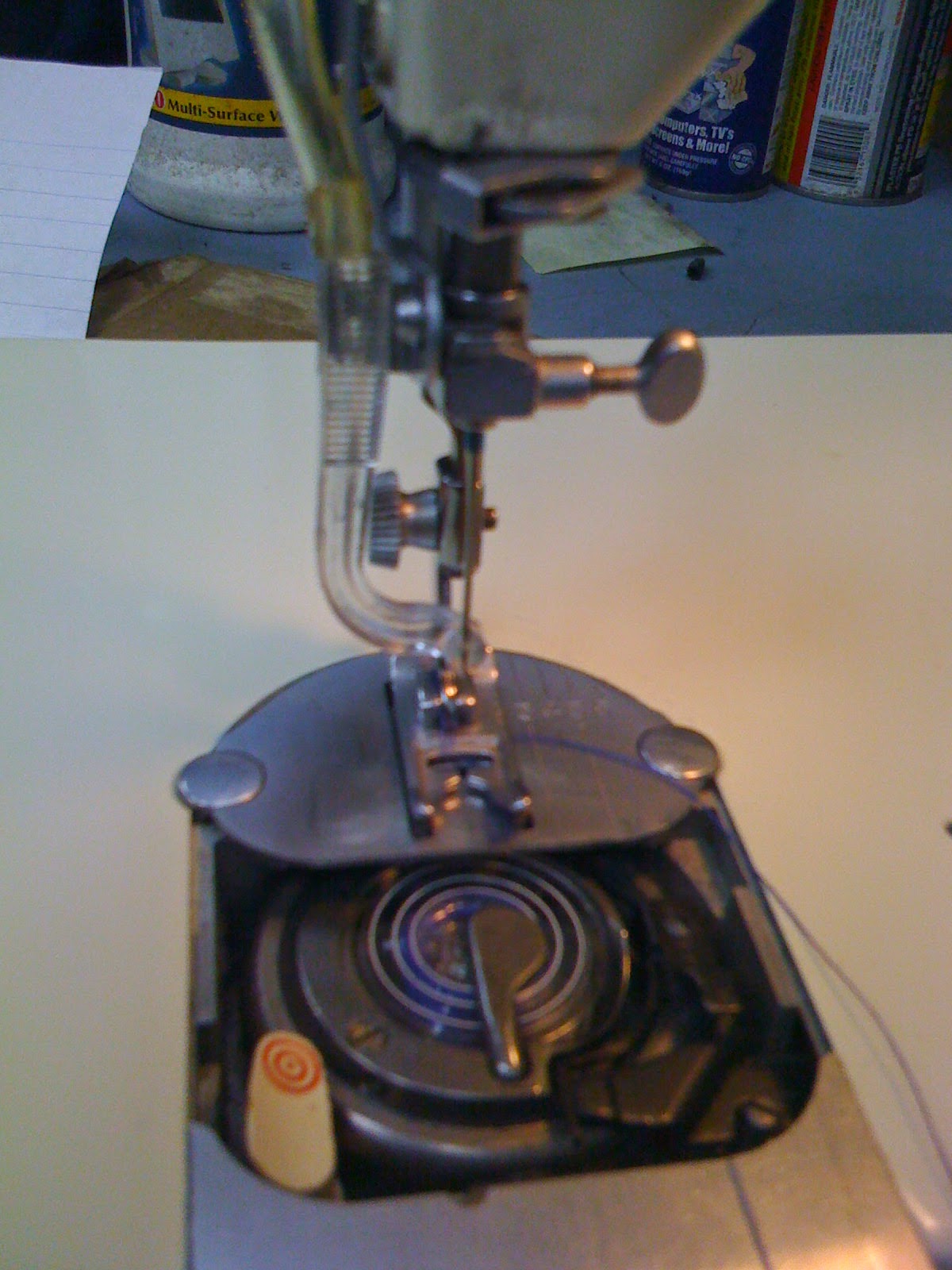
Many sewing machine technicians are a bit threatened by sergers. They do not see as many sergers as standard sewing machines, and sergers are very different from regular sewing machines. After working for a while on sergers, however, they become far less intimidating and much easier to service.
Frequently, I find active sewers who are unfamiliar with sergers. Sometimes we get the idea that everybody already knows what we know, but when it comes to sergers they appear to be a bit of a mystery to a lot of people.
Have you ever wondered what people think about something?
I do? When it comes to sergers I decided to find out. I set out on a mission to ask complete strangers what a serger was. The responses I got were amazing.
At the department store, people are busy looking for stuff themselves. They usually, look past you and ignore your presence. When you ask them a question, some people appear shocked or they just look past you in a blank stare. Fortunately, a few people were friendly and really tried to help me figure out what a serger is. People had some truly creative opinions. A young boy thought it might be a team logo or a new video game. A lady thought it was a new type of fruit. One of the workers pointed me to hardware and said what I needed was a special kind of electrical fuse.
Now, your question remains. What is a serger?
Unlike the ordinary home sewing machine, the serger is a particular type of machine that sews a hem, overcasts the edge of the fabric, and trims the fabric all at one time. Almost any sewing project can be accelerated by use of a serger whether the application is for utility (hidden away) or decorative to embellish the project. Note the serger does not do embroidery and does not follow embroidery designs.
In 1846, Elias Howe patented the first practical sewing machine, but it was not until 1881 that the first serger was introduced by the Merrow Sewing Machine Company. This machine produced a two or three thread overlocking stitch often called a Merrow stitch. This provided a huge advancement over the typical straight stitch machine. The Merrow was able to sew a hem or seam while overcastting the edge of the fabric. In some cases this was done without trimming, but usually it included blades that trimmed the fabric leaving a beautifully finished edge.
It is interesting how words evolve over time. The Merrow became the overlock and is most commonly referred to today as the serger. The terms overedging, overcastting, overlocking, and serging are often used interchangeably.
Sergers were the domain of industry and factories until 1964, when the Baby Lock brand of home sergers launched. Several engineers at Juki had envisioned a scaled down version of the heavy industrial serger, but the Juki company was not interested. So the designers formed their own new company and launched Baby Lock home sergers.
Unlike the standard sewing machine that uses needle and hook assemblies to create interlocking stitches, the serger uses devices called loopers. A lower looper and an upper looper assist interact with the needle to create the overlocking stitches. Instead of using a shuttle or bobbin, the serger uses multiple cones of thread guided through tension assemblies to the loopers and needle. Sergers also use special needle plates with stitch fingers or horizontal needle fingers to help form the stitches.
Sergers double the speed of ordinary home sewing machines, but are far slower than their big sister industrial sergers. Home sergers are designed to for convenience and creativity. They are much lighter, smaller, sleeker, and more user friendly than the heavy duty industrial models. Industrials commonly sew up to 9,500 stitches per minute, but only produce one overlocking stitch. Home sergers sew between 1,500 and 3,000 stitches per minute and may produce a dozen or two different overcastting stitches.
Sewing machine repair and serger repair are very similar. Although the serger replaces the hook with loopers, it is essentially an oscillating hook sewing machine. With experience it is as easily repaired as other sewing machines.
Today Baby Lock offers a serger that uses up to eight cones of thread to produce as many as 86 different overlocking stitches. Sergers of many different brands today come in a variety of configurations, but generally you will find sergers that can sew using 2, 3, 4, 5, 6, 7, or 8 different threads.
Today the home serger has become an integral part of a quality sewing room set up. It is capable of streamlining sewing projects producing far better quality while cutting sewing time in half. Yet, it does not replace the regular sewing machine.
So, how do you reply to the question, What is a serger? Is it your super sewing machine that seams, overcasts, and trim at the speed of light? Is it your creative finishing machine? Is it your overcastting, overedging, overlocking, serging machine? Of course it is your serger.
To learn to sew and how to sew with a serger check out http://www.sewinganswers.com.
To learn about sewing machine repair see http://www.fixsewingmachines.com
To find quality sewing machines online see http://www.sewingmachinemall.com.
To find quality embroidery designs see http://www.libisembroidery.com.
Monday, May 7, 2012
Friday, April 20, 2012
Top Sewing Machine Questions
Question 1: What makes a sewing machine?
Since the first sewing machine was patented in 1846, it has essentially been a mechanical appliance used to connect materials together using needle and thread. Today, we think of the sewing machine largely as an appliance to join fabrics.
Question 2: Are there different types of sewing machines?
While many people think of sewing machines only in terms of their standard home sewing machine, there are hundreds of sewing machines designed for specific applications at home and in factories. Since sewing machine are either used in a home or factory setting we might say there are two broad kinds: Home and Commercial or Home and Industrial.
At home you will find the typical home sewing machine, a serger, an embroidery machine, an embellishing machine, quilting machines, a blind hemming machine, and sometimes a light industrial straight stitch or zig zag machine.
In industry, you will find much more rugged and faster sewing specialty machines often used for a single application. Here you can find walking foot machines, blind stitch machines, upholstery machines, leather machines, button machines, machines to make shoes, saddles, sails, and more.
Q3: What are the typical kinds of home sewing machines today?
All home sewing machines look about the same, but the insides have big differences. We can group them into three categories: mechanical, electronic, and computerized. You can learn to sew and master the techniques of how to sew on even any of these, but there are specialized techniques that might require specialized sewing classes to master.
Inside a mechanical machine you discover an AC motor, gears, levers, and shafts. In electronic machines, you see electronic devices controlling power distribution and stitch selection.
Computerized sewing machines incorporate advanced technologies to provide power control, stitch formation, stitch information, and numerous convenience features.
Mechanicals are the most limited in features, stitches, and capabilities, while computerized machines offer the most features, stitches, and capabilities.
Question Four: Why do sewing machines range so much in price?
Sewing machines sell for between $100 and $12,000 dollars. The price clearly reflects a combination of considerations: dependability, durability, features, convenience, and capabilities. The more you pay the less frustration you get. The less you pay the less capability and performance you have.
Over $1,000 you find super quality sewing machines some with hundreds of stitches and even embroidery capabilities.
Around $500, you find a good solid machine with a limited stitch set.
Under $100, you get junk hardly worth taking home.
Question 5: Why do we need a sewing machine?
The sewing machine is an amazingly versatile device that unleashes almost unlimited creative potential. You can use a sewing machine for garment construction, wearable art, embellishment, embroidery, endless home decorating projects, heirloom creations, quilting, crafting, and so much more. When you add all the specialty machine applications common in industry, sewing machines are vital for so many different tasks.
Q6: How do you choose the best sewing machine for you?
Your best sewing machine or the right one for me will do two essential things: Empower me to create and reduce your frustrations in the process. You can find your machine by making sure it has the capabilities and features you want and need. If you buy value instead of just price, you benefit every time you sew.
Question Seven: What is the difference between a regular sewing machine, a serger, and an embroidery machine?
At the center of every home sewing center is the home sewing machine. This is the versatile machine used for so many different applications involving seams. Still, if you enjoy sewing, you will treasure the benefits of the home serger. It actually seams, overcasts, and trims all in one high speed step saving time and energy. You may also enjoy the embroidery machine which is a single purpose machine designed to sew beautiful preprogrammed designs.
Question 8: Where can I get a new sewing machine?
While you can buy sewing machines over the internet and in department stores, these merchants offer no support, instruction, or service. You may not need these with a simple microwave oven, but to get the most from your sewing machine, you need all three: support, instruction, and service.
Better quality sewing machines are only sold through authorized sewing machine dealers. When you purchase a machine from one of these dealers, you receive much more than a machine in a box. You get expert advice and assistance. You get professional sewing machine repair and maintenance service. And you get very helpful sewing machine instruction.
To get the most from your sewing machine investment, find your trusted local sewing machine dealer.Get more about sewing machine repair with Dr. David Trumble's complete Sewing Machine Repair Manuals. Check out his free beginner's course. Also check out his other sewing resources learn to sew, how to sew, and other sewing sights including http://www.SewAndQuiltStore.com, http://www.SewingMachineMall.com, http://www.SewingAnswers.com, http://www.LibisEmbroidery.com and http://www.FixSewingMachines.com.
Since the first sewing machine was patented in 1846, it has essentially been a mechanical appliance used to connect materials together using needle and thread. Today, we think of the sewing machine largely as an appliance to join fabrics.
Question 2: Are there different types of sewing machines?
While many people think of sewing machines only in terms of their standard home sewing machine, there are hundreds of sewing machines designed for specific applications at home and in factories. Since sewing machine are either used in a home or factory setting we might say there are two broad kinds: Home and Commercial or Home and Industrial.
At home you will find the typical home sewing machine, a serger, an embroidery machine, an embellishing machine, quilting machines, a blind hemming machine, and sometimes a light industrial straight stitch or zig zag machine.
In industry, you will find much more rugged and faster sewing specialty machines often used for a single application. Here you can find walking foot machines, blind stitch machines, upholstery machines, leather machines, button machines, machines to make shoes, saddles, sails, and more.
Q3: What are the typical kinds of home sewing machines today?
All home sewing machines look about the same, but the insides have big differences. We can group them into three categories: mechanical, electronic, and computerized. You can learn to sew and master the techniques of how to sew on even any of these, but there are specialized techniques that might require specialized sewing classes to master.
Inside a mechanical machine you discover an AC motor, gears, levers, and shafts. In electronic machines, you see electronic devices controlling power distribution and stitch selection.
Computerized sewing machines incorporate advanced technologies to provide power control, stitch formation, stitch information, and numerous convenience features.
Mechanicals are the most limited in features, stitches, and capabilities, while computerized machines offer the most features, stitches, and capabilities.
Question Four: Why do sewing machines range so much in price?
Sewing machines sell for between $100 and $12,000 dollars. The price clearly reflects a combination of considerations: dependability, durability, features, convenience, and capabilities. The more you pay the less frustration you get. The less you pay the less capability and performance you have.
Over $1,000 you find super quality sewing machines some with hundreds of stitches and even embroidery capabilities.
Around $500, you find a good solid machine with a limited stitch set.
Under $100, you get junk hardly worth taking home.
Question 5: Why do we need a sewing machine?
The sewing machine is an amazingly versatile device that unleashes almost unlimited creative potential. You can use a sewing machine for garment construction, wearable art, embellishment, embroidery, endless home decorating projects, heirloom creations, quilting, crafting, and so much more. When you add all the specialty machine applications common in industry, sewing machines are vital for so many different tasks.
Q6: How do you choose the best sewing machine for you?
Your best sewing machine or the right one for me will do two essential things: Empower me to create and reduce your frustrations in the process. You can find your machine by making sure it has the capabilities and features you want and need. If you buy value instead of just price, you benefit every time you sew.
Question Seven: What is the difference between a regular sewing machine, a serger, and an embroidery machine?
At the center of every home sewing center is the home sewing machine. This is the versatile machine used for so many different applications involving seams. Still, if you enjoy sewing, you will treasure the benefits of the home serger. It actually seams, overcasts, and trims all in one high speed step saving time and energy. You may also enjoy the embroidery machine which is a single purpose machine designed to sew beautiful preprogrammed designs.
Question 8: Where can I get a new sewing machine?
While you can buy sewing machines over the internet and in department stores, these merchants offer no support, instruction, or service. You may not need these with a simple microwave oven, but to get the most from your sewing machine, you need all three: support, instruction, and service.
Better quality sewing machines are only sold through authorized sewing machine dealers. When you purchase a machine from one of these dealers, you receive much more than a machine in a box. You get expert advice and assistance. You get professional sewing machine repair and maintenance service. And you get very helpful sewing machine instruction.
To get the most from your sewing machine investment, find your trusted local sewing machine dealer.Get more about sewing machine repair with Dr. David Trumble's complete Sewing Machine Repair Manuals. Check out his free beginner's course. Also check out his other sewing resources learn to sew, how to sew, and other sewing sights including http://www.SewAndQuiltStore.com, http://www.SewingMachineMall.com, http://www.SewingAnswers.com, http://www.LibisEmbroidery.com and http://www.FixSewingMachines.com.
Wednesday, April 4, 2012
Embroidery Machine Repair Procedures
What is a repair?
Does it require replacing parts? In many cases, when you are working to repair sewing machines and embroidery machines, a good cleaning and a few adjustments are all that are needed to make a machine work like new. However, is that really a repair?
In a sense, it is just a matter of words. A customer might think a quick fix is better than a complete job. It might save dollars. However, if we forget about words like cleaning, servicing, and adjusting and just call it all repair; the customer gets what they really want. The technician stops mixing words.
Embroidery machines like other sewing machines are vulnerable to debris, lint, dust, grease, grime, gunk, dried out lubricants, encrusted lubricants, and gummy stuff. It is essential that these be removed.
The goal of embroidery machine repair is to restore a machine to like new operating contition. The machine should be capable of sewing out embroidery designs without mechanical difficulties.
A common temptation for technicians is to just make a quick adjustment or even replace a part and leave the insides of the machine full of crap. This is a no no. Always do a thorough cleaning and proper lubrication job. This will make the machine last much longer, work better, and cause far less frustration.
Think back to the initial test on the machine. What clues did you get? Have a good cleaning and adjusting done the trick? Or, were there problems that require replacing parts? Trace down the issues. Inspect each possible source of the problems. Check for wear, chips, breakage, burn spots, loose connections, etc.
In those rare instances when a part must be replaced, be sure to fix only what is broken. The most common items to replace are belts, gears, and circuit boards. The first two of these are straight forward mechanical tasks. Remove and replace the part.
Circuit boards and electrical components are often a bit threatening to the novice technician. They require a bit more caution than a mechanical fix. First, be sure to unplug the power cord before working on the electronics of a machine. Indeed, always unplug the machine before removing covers.
Careful inspection of electrical, electronic, and computer parts is essential. Look for burn spots, misconnections, pinched or twisted wires. Often a little wiggle or press down on a loose connection is all that is really needed.
Make every connection right. Unless the connection is true, the proper electrical flow is impossible. A loose connection may cause intermittent problems, but when everything is working the way it should, the electronics make life really good.
Static electricity is a technicians enemy. A single discharge can ruin a circuit board. Some manufacturers require elaborate static prevention measures to protect their circuitry. In the sewing machine repair shop, a static free mat is vital. Bernina requires the addition of a wrist band protector.
When you are working on delicate electronic parts, special tools are often needed. Non-metallic probes, screw drivers, and other tools can be a big help. Your electronics supply house should have an ample supply of specialty tools, mats, and devices to make your work with electronics easier.
More advanced embroidery equipment and sewing machines will use plug n play components. These are easily removed and replaced.
Diagnosis is an art, but a variety of resources can be helpful. An official service manual, an authorized technician specializing in you brand, or the manufacturers technical support line may offer invaluable help.
Once you identify the problem component, carefully remove it and replace it with a new part. In some cases, manufacturers will offer refurbished parts. Once installed, thoroughly test out the machine to insure its proper performance.
Dr. David Trumble's Free 7 Steps To Peak Performance is yours now for sewing machine repair.
To purchase your next sewing machine or embroidery machine online go to http://www.sewingmachinemall.com .
Does it require replacing parts? In many cases, when you are working to repair sewing machines and embroidery machines, a good cleaning and a few adjustments are all that are needed to make a machine work like new. However, is that really a repair?
In a sense, it is just a matter of words. A customer might think a quick fix is better than a complete job. It might save dollars. However, if we forget about words like cleaning, servicing, and adjusting and just call it all repair; the customer gets what they really want. The technician stops mixing words.
Embroidery machines like other sewing machines are vulnerable to debris, lint, dust, grease, grime, gunk, dried out lubricants, encrusted lubricants, and gummy stuff. It is essential that these be removed.
The goal of embroidery machine repair is to restore a machine to like new operating contition. The machine should be capable of sewing out embroidery designs without mechanical difficulties.
A common temptation for technicians is to just make a quick adjustment or even replace a part and leave the insides of the machine full of crap. This is a no no. Always do a thorough cleaning and proper lubrication job. This will make the machine last much longer, work better, and cause far less frustration.
Think back to the initial test on the machine. What clues did you get? Have a good cleaning and adjusting done the trick? Or, were there problems that require replacing parts? Trace down the issues. Inspect each possible source of the problems. Check for wear, chips, breakage, burn spots, loose connections, etc.
In those rare instances when a part must be replaced, be sure to fix only what is broken. The most common items to replace are belts, gears, and circuit boards. The first two of these are straight forward mechanical tasks. Remove and replace the part.
Circuit boards and electrical components are often a bit threatening to the novice technician. They require a bit more caution than a mechanical fix. First, be sure to unplug the power cord before working on the electronics of a machine. Indeed, always unplug the machine before removing covers.
Careful inspection of electrical, electronic, and computer parts is essential. Look for burn spots, misconnections, pinched or twisted wires. Often a little wiggle or press down on a loose connection is all that is really needed.
Make every connection right. Unless the connection is true, the proper electrical flow is impossible. A loose connection may cause intermittent problems, but when everything is working the way it should, the electronics make life really good.
Static electricity is a technicians enemy. A single discharge can ruin a circuit board. Some manufacturers require elaborate static prevention measures to protect their circuitry. In the sewing machine repair shop, a static free mat is vital. Bernina requires the addition of a wrist band protector.
When you are working on delicate electronic parts, special tools are often needed. Non-metallic probes, screw drivers, and other tools can be a big help. Your electronics supply house should have an ample supply of specialty tools, mats, and devices to make your work with electronics easier.
More advanced embroidery equipment and sewing machines will use plug n play components. These are easily removed and replaced.
Diagnosis is an art, but a variety of resources can be helpful. An official service manual, an authorized technician specializing in you brand, or the manufacturers technical support line may offer invaluable help.
Once you identify the problem component, carefully remove it and replace it with a new part. In some cases, manufacturers will offer refurbished parts. Once installed, thoroughly test out the machine to insure its proper performance.
Dr. David Trumble's Free 7 Steps To Peak Performance is yours now for sewing machine repair.
To purchase your next sewing machine or embroidery machine online go to http://www.sewingmachinemall.com .
Friday, December 2, 2011
Top Sewing Machine Questions
The Top Eight Sewing Machine Questions
by David Trumble
Q1: What makes a sewing machine?
Since the first sewing machine was patented in 1846, it has essentially been a mechanical appliance used to connect materials together using needle and thread. Today, we think of the sewing machine largely as an appliance to join fabrics.
Question 2: Are there different types of sewing machines?
While many people think of sewing machines only in terms of their standard home sewing machine, there are hundreds of sewing machines designed for specific applications at home and in factories. Since sewing machine are either used in a home or factory setting we might say there are two broad kinds: Home and Commercial or Home and Industrial. At home you will find the typical home sewing machine, a serger, an embroidery machine, an embellishing machine, quilting machines, a blind hemming machine, and sometimes a light industrial straight stitch or zig zag machine. In industry, you will find much more rugged and faster sewing specialty machines often used for a single application. Here you can find walking foot machines, blind stitch machines, upholstery machines, leather machines, button machines, machines to make shoes, saddles, sails, and more.
Q3: What are the typical kinds of home sewing machines today?
All home sewing machines look about the same, but the insides have big differences. We can group them into three categories: mechanical, electronic, and computerized. Inside a mechanical machine you discover an AC motor, gears, levers, and shafts. In electronic machines, you see electronic devices controlling power distribution and stitch selection. Computerized sewing machines incorporate advanced technologies to provide power control, stitch formation, stitch information, and numerous convenience features. Mechanicals are the most limited in features, stitches, and capabilities, while computerized machines offer the most features, stitches, and capabilities.
Question Four: Why do sewing machines range so much in price?
Sewing machines sell for between $100 and $12,000 dollars. The price clearly reflects a combination of considerations: dependability, durability, features, convenience, and capabilities. The more you pay the less frustration you get. The less you pay the less capability and performance you have. Over $1,000 you find super quality sewing machines some with hundreds of stitches and even embroidery capabilities. Around $500, you find a good solid machine with a limited stitch set. Under $100, you get junk hardly worth taking home.
Why do we need a sewing machine?
The sewing machine is an amazingly versatile device that unleashes almost unlimited creative potential. You can use a sewing machine for garment construction, wearable art, embellishment, embroidery, endless home decorating projects, heirloom creations, quilting, crafting, and so much more. When you add all the specialty machine applications common in industry, sewing machines are vital for so many different tasks.
Q6: How do you choose the best sewing machine for me?
You best sewing machine or the right one for me will do two essential things: Empower me to create and reduce your frustrations in the process. You can find your machine by making sure it has the capabilities and features you want and need. If you buy value instead of just price, you benefit every time you sew.
Question Seven: What is the difference between a regular sewing machine, a serger, and an embroidery machine?
At the center of every home sewing center is the home sewing machine. This is the versatile machine used for so many different applications involving seams. Still, if you enjoy sewing, you will treasure the benefits of the home serger. It actually seams, overcasts, and trims all in one high speed step saving time and energy. You may also enjoy the embroidery machine which is a single purpose machine designed to sew beautiful preprogrammed designs.
Question 8: Where can I get a new sewing machine?
While you can buy sewing machines over the internet and in department stores, these merchants offer no support, instruction, or service. You may not need these with a simple microwave oven, but to get the most from your sewing machine, you need all three: support, instruction, and service. Better quality sewing machines are only sold through authorized sewing machine dealers. When you purchase a machine from one of these dealers, you receive much more than a machine in a box. You get expert advice and assistance. You get professional repair and maintenance service. And you get very helpful sewing machine instruction. To get the most from your sewing machine investment, find your trusted local sewing machine dealer.
Get more about sewing machine repair with Dr. David Trumble's complete Sewing Machine Repair Manuals. Check out his free beginner's course. Also check out his other sewing resources learn to sew, how to sew, and other sewing sights including http://www.SewAndQuiltStore.com, http://www.SewingMachineMall.com, http://SewingAnswers.com, and http://www.FixSewingMachines.com.
by David Trumble
Q1: What makes a sewing machine?
Since the first sewing machine was patented in 1846, it has essentially been a mechanical appliance used to connect materials together using needle and thread. Today, we think of the sewing machine largely as an appliance to join fabrics.
Question 2: Are there different types of sewing machines?
While many people think of sewing machines only in terms of their standard home sewing machine, there are hundreds of sewing machines designed for specific applications at home and in factories. Since sewing machine are either used in a home or factory setting we might say there are two broad kinds: Home and Commercial or Home and Industrial. At home you will find the typical home sewing machine, a serger, an embroidery machine, an embellishing machine, quilting machines, a blind hemming machine, and sometimes a light industrial straight stitch or zig zag machine. In industry, you will find much more rugged and faster sewing specialty machines often used for a single application. Here you can find walking foot machines, blind stitch machines, upholstery machines, leather machines, button machines, machines to make shoes, saddles, sails, and more.
Q3: What are the typical kinds of home sewing machines today?
All home sewing machines look about the same, but the insides have big differences. We can group them into three categories: mechanical, electronic, and computerized. Inside a mechanical machine you discover an AC motor, gears, levers, and shafts. In electronic machines, you see electronic devices controlling power distribution and stitch selection. Computerized sewing machines incorporate advanced technologies to provide power control, stitch formation, stitch information, and numerous convenience features. Mechanicals are the most limited in features, stitches, and capabilities, while computerized machines offer the most features, stitches, and capabilities.
Question Four: Why do sewing machines range so much in price?
Sewing machines sell for between $100 and $12,000 dollars. The price clearly reflects a combination of considerations: dependability, durability, features, convenience, and capabilities. The more you pay the less frustration you get. The less you pay the less capability and performance you have. Over $1,000 you find super quality sewing machines some with hundreds of stitches and even embroidery capabilities. Around $500, you find a good solid machine with a limited stitch set. Under $100, you get junk hardly worth taking home.
Why do we need a sewing machine?
The sewing machine is an amazingly versatile device that unleashes almost unlimited creative potential. You can use a sewing machine for garment construction, wearable art, embellishment, embroidery, endless home decorating projects, heirloom creations, quilting, crafting, and so much more. When you add all the specialty machine applications common in industry, sewing machines are vital for so many different tasks.
Q6: How do you choose the best sewing machine for me?
You best sewing machine or the right one for me will do two essential things: Empower me to create and reduce your frustrations in the process. You can find your machine by making sure it has the capabilities and features you want and need. If you buy value instead of just price, you benefit every time you sew.
Question Seven: What is the difference between a regular sewing machine, a serger, and an embroidery machine?
At the center of every home sewing center is the home sewing machine. This is the versatile machine used for so many different applications involving seams. Still, if you enjoy sewing, you will treasure the benefits of the home serger. It actually seams, overcasts, and trims all in one high speed step saving time and energy. You may also enjoy the embroidery machine which is a single purpose machine designed to sew beautiful preprogrammed designs.
Question 8: Where can I get a new sewing machine?
While you can buy sewing machines over the internet and in department stores, these merchants offer no support, instruction, or service. You may not need these with a simple microwave oven, but to get the most from your sewing machine, you need all three: support, instruction, and service. Better quality sewing machines are only sold through authorized sewing machine dealers. When you purchase a machine from one of these dealers, you receive much more than a machine in a box. You get expert advice and assistance. You get professional repair and maintenance service. And you get very helpful sewing machine instruction. To get the most from your sewing machine investment, find your trusted local sewing machine dealer.
Get more about sewing machine repair with Dr. David Trumble's complete Sewing Machine Repair Manuals. Check out his free beginner's course. Also check out his other sewing resources learn to sew, how to sew, and other sewing sights including http://www.SewAndQuiltStore.com, http://www.SewingMachineMall.com, http://SewingAnswers.com, and http://www.FixSewingMachines.com.
Wednesday, May 18, 2011
Fix Sticky Serger Stitches
What Do You Do With Skipped And Sticky Serger Stitches?
When you push on the foot control, you expect your serger to zip along serging a perfect stitch in an endless seam. When the stitch fails to form or skips hear and there, it causes horrific frustration. The sheer number of threads make serging a challenge. It sews so fast, up to 1500 stitches per minute, that serging can be a bit unnerving.
Consistent stitching, proper thread placement, and fine balanced tensions form quality stitches. Puckers, irregularities, and loops are noticeably absent.
Failure to form a stitch and skipped stitches are two of the more frustrating challenges serger users experience. These problems require a concerted effort to identify the causes and find solutions.
The most common causes of skipped stitches and unformed stitches include needle problems, threading problems , thread issues, faulty tensions, fabric issues, snagging, and misalignment of either looper timing or needle bar height or both. Check each possible cause and eliminate one of the at a time.
Start by replacing the needle or needles involved. Needle burrs, flaws, and bends are common causes of skipped stitches. Make sure the needles are fully seated in their holders.
Serger needle positioning is critical. Some sergers use ordinary sewing needles that have flat back tops, but many use special needles with rounded tops. On the front of the needle is a groove for the thread to ride in while the needle goes down. On the back and just above the eye is a cut out space known as the scarf. The scarf must be at ninety degrees to the lower looper. Make sure the needle is straight forward and properly seated in its holder. Use the right needle for the application you are doing.
The needle bar height must be properly aligned in order for stitches to form. It can be dislodged by the needle striking hard surfaces, needle breakage, or by sewing through very heavy materials.
Threading is also a very common source of difficulties. To fix this problem, rethread properly. Be alert to anything that might snag the thread.
Not all threads are equal. Some thread work better, some worse. Rethread with separate color threads or easier tracking. Make sure tensions are right.
Generally, sergers work on all fabrics, however, certain challenges can emerge with super thin, slippery, or thicker fabrics require accommodations.
Failure to form stitches usually results from the same causes as skipped stitches, but the issues are more pronounced. It is a matter of degree. If a serger issue causes skipped stitches, it is only a matter of time before stitches fail to form at all.
Apply the same approaches to seek solutions. One additional tip, however, is to clear the stitch finger and draw the theads under and behind the presser foot prior to starting to serger.
Generally, when the stitch quality is less than acceptable there are some basic things to check every time. These include needles, thread and threading, tensions, loopers, snag causes, settings, and balance. Replacing needles properly, rethreading properly, and adjusting tension balance are the three basic approaches to solve stitch problems. Get help from our professional sewing machine technician if you continue seeing problems.
When you push on the foot control, you expect your serger to zip along serging a perfect stitch in an endless seam. When the stitch fails to form or skips hear and there, it causes horrific frustration. The sheer number of threads make serging a challenge. It sews so fast, up to 1500 stitches per minute, that serging can be a bit unnerving.
Consistent stitching, proper thread placement, and fine balanced tensions form quality stitches. Puckers, irregularities, and loops are noticeably absent.
Failure to form a stitch and skipped stitches are two of the more frustrating challenges serger users experience. These problems require a concerted effort to identify the causes and find solutions.
The most common causes of skipped stitches and unformed stitches include needle problems, threading problems , thread issues, faulty tensions, fabric issues, snagging, and misalignment of either looper timing or needle bar height or both. Check each possible cause and eliminate one of the at a time.
Start by replacing the needle or needles involved. Needle burrs, flaws, and bends are common causes of skipped stitches. Make sure the needles are fully seated in their holders.
Serger needle positioning is critical. Some sergers use ordinary sewing needles that have flat back tops, but many use special needles with rounded tops. On the front of the needle is a groove for the thread to ride in while the needle goes down. On the back and just above the eye is a cut out space known as the scarf. The scarf must be at ninety degrees to the lower looper. Make sure the needle is straight forward and properly seated in its holder. Use the right needle for the application you are doing.
The needle bar height must be properly aligned in order for stitches to form. It can be dislodged by the needle striking hard surfaces, needle breakage, or by sewing through very heavy materials.
Threading is also a very common source of difficulties. To fix this problem, rethread properly. Be alert to anything that might snag the thread.
Not all threads are equal. Some thread work better, some worse. Rethread with separate color threads or easier tracking. Make sure tensions are right.
Generally, sergers work on all fabrics, however, certain challenges can emerge with super thin, slippery, or thicker fabrics require accommodations.
Failure to form stitches usually results from the same causes as skipped stitches, but the issues are more pronounced. It is a matter of degree. If a serger issue causes skipped stitches, it is only a matter of time before stitches fail to form at all.
Apply the same approaches to seek solutions. One additional tip, however, is to clear the stitch finger and draw the theads under and behind the presser foot prior to starting to serger.
Generally, when the stitch quality is less than acceptable there are some basic things to check every time. These include needles, thread and threading, tensions, loopers, snag causes, settings, and balance. Replacing needles properly, rethreading properly, and adjusting tension balance are the three basic approaches to solve stitch problems. Get help from our professional sewing machine technician if you continue seeing problems.
If you decide to consider buying a new serger, besure to check out the resources at www.SewingMachineMall.com. They offer great reviews and resources to help you find the best serger or sewing machine.
Learn information about how to repair a sewing machine from Dr. David Trumbles excellent courses and sewing machine repair book. Download a copy of his free beginner's course.
Tuesday, November 23, 2010
Centering The Needle To Repair Your Sewing Machine
Does your needle penetrate the needleplate properly?
This is an often overlooked element that can create loads of problems.
If the needle is even slightly out of proper position in any direction, it will adversely affect the stitch formation and tension of the stitching.
More specifically, the needle must be positioned so that it centers in the needle plate front to back, side to side, default prositioning, and needle bar height. Setting these positions is a major part of any sewing machine repair.
Lets look at these in reverse order: The needle bar height is set by a set screw on the needle bar clamp. The point of the needle must move down through the needle plate hole, into the bobbin carrier area, and begin rising as the point of the hook passes behind the scarf of the needle. If the point of the needle passes too high or too low, poor stitches, irregular stitches, intermitten stitches, or no stitches may result.
To properly set the needle bar height, visually trace from the needle up the bar until the bar passes through the hole in the head and then up until you see a clamp with a set screw in the center. This is the adjusting screw.
Rotate the hand wheel toward you until the needle moves to its lowest position. It must not strike anything. Rotate just slightly until the point of the hook is ready to pass behind the needle. The point of the hook must pass behind the scarf or cut out in the back of the needle and above the eye. If this is not happening, loosen the set screw mentioned previously. Adjsut the bar up or down without turing it. Retighten the set screw.
Next set the machine to its default needle position. Some machines default to a center position, while others use a left needle position. In either case, make sure the needle is properly positioned. If center positioning is used, the needle must enter the needle plate in the exact center of the needle hole. If left position is used, the needle should clear the left side of the hole but match the left most position. In some machines multiple position is used. In these cases, make sure the center position matches properly.
To adjust this positioning, visually trace the needle bar up to the bracket you referenced to adjust height. Note an arm connects to the right of this bracket and goes to another connection. This connection has an eccentric screw to adjust the left to right positioning. A set screw may or may not hold this eccentric in position. Loosen the set screw and adjust the eccentric until the needle is properly positiioned. Test by rotating the hand wheel through one complete needle bar action up and down.
Next note that there is another arm running from this connection and reachinging back to the cam tracker. In the center of this arm is another set screw or eccentric to control how far left or right the needle moves. Adjust so that the needle penetrates the needle plate inside the edges of the hole on the right and left.
Finally, the needle must be positioned properly front to back. This is called the hook-needle clearance. The needle should penetrate the needle hole in the center front to back, but it must also cause the needle to be positioned as close to the point of the hook as possible without actually touching.
To adjust the hook needle clearance. trace the needle bar all the way to the top sleeve or connection with the sewing machine head. Note usually there is a set screw from the front and an eccentric or adjusting screw running through the needle bar assembly clamp. Loosen the set screw and position the needle bar assembly properly.
A major part of sewing machine repair consists of knowing what screws to turn and being able to identify these adjusting points from one model to the next. With training and experience you can be confident if properly setting the needle bar for optimum performance and repair sewing machines of any brand.
This is an often overlooked element that can create loads of problems.
If the needle is even slightly out of proper position in any direction, it will adversely affect the stitch formation and tension of the stitching.
More specifically, the needle must be positioned so that it centers in the needle plate front to back, side to side, default prositioning, and needle bar height. Setting these positions is a major part of any sewing machine repair.
Lets look at these in reverse order: The needle bar height is set by a set screw on the needle bar clamp. The point of the needle must move down through the needle plate hole, into the bobbin carrier area, and begin rising as the point of the hook passes behind the scarf of the needle. If the point of the needle passes too high or too low, poor stitches, irregular stitches, intermitten stitches, or no stitches may result.
To properly set the needle bar height, visually trace from the needle up the bar until the bar passes through the hole in the head and then up until you see a clamp with a set screw in the center. This is the adjusting screw.
Rotate the hand wheel toward you until the needle moves to its lowest position. It must not strike anything. Rotate just slightly until the point of the hook is ready to pass behind the needle. The point of the hook must pass behind the scarf or cut out in the back of the needle and above the eye. If this is not happening, loosen the set screw mentioned previously. Adjsut the bar up or down without turing it. Retighten the set screw.
Next set the machine to its default needle position. Some machines default to a center position, while others use a left needle position. In either case, make sure the needle is properly positioned. If center positioning is used, the needle must enter the needle plate in the exact center of the needle hole. If left position is used, the needle should clear the left side of the hole but match the left most position. In some machines multiple position is used. In these cases, make sure the center position matches properly.
To adjust this positioning, visually trace the needle bar up to the bracket you referenced to adjust height. Note an arm connects to the right of this bracket and goes to another connection. This connection has an eccentric screw to adjust the left to right positioning. A set screw may or may not hold this eccentric in position. Loosen the set screw and adjust the eccentric until the needle is properly positiioned. Test by rotating the hand wheel through one complete needle bar action up and down.
Next note that there is another arm running from this connection and reachinging back to the cam tracker. In the center of this arm is another set screw or eccentric to control how far left or right the needle moves. Adjust so that the needle penetrates the needle plate inside the edges of the hole on the right and left.
Finally, the needle must be positioned properly front to back. This is called the hook-needle clearance. The needle should penetrate the needle hole in the center front to back, but it must also cause the needle to be positioned as close to the point of the hook as possible without actually touching.
To adjust the hook needle clearance. trace the needle bar all the way to the top sleeve or connection with the sewing machine head. Note usually there is a set screw from the front and an eccentric or adjusting screw running through the needle bar assembly clamp. Loosen the set screw and position the needle bar assembly properly.
A major part of sewing machine repair consists of knowing what screws to turn and being able to identify these adjusting points from one model to the next. With training and experience you can be confident if properly setting the needle bar for optimum performance and repair sewing machines of any brand.
Friday, October 8, 2010
The Upper Shaft And Sewing Machines Repair
One might think that fixing sewing machines is all about turning the right screw, and they would be at least partly right.
When you remove the covers of your sewing machine, you might be amazed at all the little parts and all the different screws. It can look pretty complicated.
Yet, if you take a second look and begin to trace the shafts and levers with your eyes, it gradually starts to make sense. Start your gaze at the hand wheel and move across the top of the sewing machine from right to left. You will notice a turning shaft running the length of the machine with some pulleys, belts, gears, and levers connected here and there. You might notice buttons or levers from the front of the machine reaching back to adjust stitch length, stitch width, or even select different stitches.
Relax and allow yourself to process what you see. From the hand wheel, you can see where the belt from the motor drives the whole upper shaft. You will also see a shaft or belt directing the action of the upper shaft down into the bottom of the machine. As your eyes move to the left, you might see a round gismo with bumps or grooves all around it and little fingers that follow along against them. This is the cam or device that controls the movement of the zig zag arm. This enables the machine to make many different stitches just by altering which groove the finger follows.
To the far left you will see the needle bar and presser bar. Check out how they are connected. See how the movement of the upper shaft transfers movement to the needle bar making it move up and down as well as right and left.
All of these parts and those on the bottom must work in harmony and perfect time. Unfortunately, they sometimes get jolted out of position. Then the machine will not perform as expected. Adjustment or repair is needed.
For example, the needlebar must be adjusted properly for height, hook-needle clearance, centering front to back and left to right. Plus the swing of the needlebar known as parabola must be set.
These settings require expert knowledge of the sewing machine repair technician, who is trained to adjust the various settings.
When you remove the covers of your sewing machine, you might be amazed at all the little parts and all the different screws. It can look pretty complicated.
Yet, if you take a second look and begin to trace the shafts and levers with your eyes, it gradually starts to make sense. Start your gaze at the hand wheel and move across the top of the sewing machine from right to left. You will notice a turning shaft running the length of the machine with some pulleys, belts, gears, and levers connected here and there. You might notice buttons or levers from the front of the machine reaching back to adjust stitch length, stitch width, or even select different stitches.
Relax and allow yourself to process what you see. From the hand wheel, you can see where the belt from the motor drives the whole upper shaft. You will also see a shaft or belt directing the action of the upper shaft down into the bottom of the machine. As your eyes move to the left, you might see a round gismo with bumps or grooves all around it and little fingers that follow along against them. This is the cam or device that controls the movement of the zig zag arm. This enables the machine to make many different stitches just by altering which groove the finger follows.
To the far left you will see the needle bar and presser bar. Check out how they are connected. See how the movement of the upper shaft transfers movement to the needle bar making it move up and down as well as right and left.
All of these parts and those on the bottom must work in harmony and perfect time. Unfortunately, they sometimes get jolted out of position. Then the machine will not perform as expected. Adjustment or repair is needed.
For example, the needlebar must be adjusted properly for height, hook-needle clearance, centering front to back and left to right. Plus the swing of the needlebar known as parabola must be set.
These settings require expert knowledge of the sewing machine repair technician, who is trained to adjust the various settings.
Subscribe to:
Posts (Atom)